
Rock identifier app: five options compared for 2026
By the AstroStack team · Updated
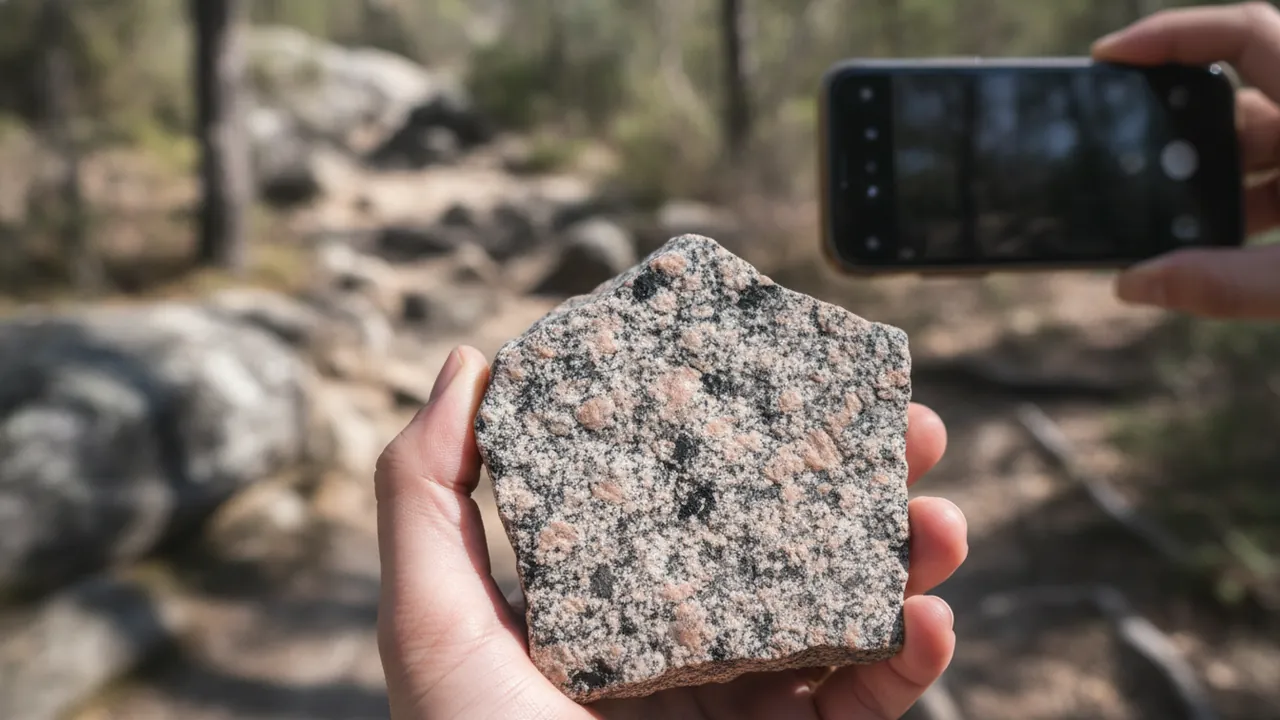
The best rock identifier app depends on the job. For a quick photo guess at a rock, crystal or gemstone, AI Rock ID and Rock Identifier: Stone ID are the two dedicated photo apps worth trying first, and both limit free use. Rockd is the pick if you want the mapped bedrock under your boots rather than a photo match, and Google Lens is the free option already on your phone.
One disclosure before the list: AI Rock ID is linked from this site and belongs to the same owner, so read my reasons for it with that in mind. Everything below comes from store listings and sites read on November 22, 2026. It describes what each app claims and charges, not scan tests, so it says nothing about how accurate any of them are.
| App | Best for | Platforms | Free tier | Price |
|---|---|---|---|---|
| AI Rock ID: Crystal Identifier | A quick photo guess for rocks, crystals and gemstones | iPhone and Android | Free scans, listed as 5 a day on the App Store | App Store lists $4.99 weekly or $29.99 yearly for unlimited scans |
| Rock Identifier: Stone ID | A second photo opinion with a large Android user base | iPhone, iPad and Android | Free download with limited daily identifications | Premium subscription; price not checked |
| Rockd | Seeing the mapped geology where you stand | iPhone, iPad and Android | Free | Free |
| Mindat | Looking up a mineral you already have a name for | Website | Free website access | Free; no standalone app confirmed |
| Google Lens | A free image-match shortlist | Android and iOS through Google apps | Free | Free |
How these rock identifier apps were picked
I looked for apps that either name a rock from a photo or help you check a name, then read their App Store and Google Play listings, plus the University of Wisconsin-Madison announcement for Rockd. Store ratings are shown only where the listing gives one. The criteria were what the listing says it does, what free use includes, platform coverage and price.
AI Rock ID: Crystal Identifier, a quick photo guess
You take a photo and the app returns a name plus properties such as color and crystal details; the App Store listing says it identifies crystals, rocks and gemstones. It is free to download, and the listing describes a limit of 5 scans a day for free use, with unlimited scans on a paid plan at $4.99 a week or $29.99 a year (App Store prices, November 2026). Here is the reason it comes first in a list about speed: it is the only one in this comparison built around a single photo-to-name step for rocks, crystals and gemstones together, and it is on both iPhone and Android. Where it falls short is the same as every photo app, a picture cannot test hardness or streak. Pick it if you want a name fast and plan to confirm it. Skip the weekly plan unless you have a lot to scan, because the yearly price works out much lower per week.
Get it on the App Store or Google Play, or read about it at airockid.com.
Rock Identifier: Stone ID, a second photo opinion
This is the Next Vision Limited app, listed with a 4.6 rating from 576 ratings on the App Store and 4.5 from about 125,000 reviews on Google Play. That Android number is the largest sample in this comparison, which says people use it, not that it is accurate. It is free to download with limited daily identifications and a premium subscription for more. It is the obvious second opinion when AI Rock ID and your own tests disagree. Check the listing for its subscription price before you tap anything. App Store listing.
Rockd: best for mapped geology under your feet
Rockd does not look at your photo at all. It uses your GPS position and shows mapped geologic units, age, lithology and nearby observations, with offline maps and a field notebook. It is free, comes from the University of Wisconsin-Madison, and shows 4.4 from 187 ratings on the App Store. If your question is "what is the bedrock here and why is this rock in this valley?", it answers that better than any photo app. It will not name the pebble in your hand. App Store listing.
Mindat: best for checking a mineral name
Mindat is a mineral and locality database for the web rather than a camera app. It works best as a reference. Use it after you have a candidate name: look up the mineral, compare hardness, streak and crystal form, and read the localities. mindat.org.
Google Lens: a free image-match shortlist
Lens matches your photo to similar images across the web. That works for a distinctive amethyst cluster and fails on gray gravel. Google publishes no accuracy number for rocks. It costs nothing and needs no new install, so it is a fine first look. lens.google.
AI Rock ID versus Rock Identifier: Stone ID
| Point | AI Rock ID | Rock Identifier: Stone ID |
|---|---|---|
| What it does | Names rocks, crystals and gemstones from a photo | Identifies rocks and stones from a photo |
| Free use | 5 scans a day (App Store listing) | Limited daily identifications |
| Paid | $4.99 weekly or $29.99 yearly | Premium subscription, price on the listing |
| Store rating | No rating shown in the listing | 4.6 from 576 ratings (iOS), 4.5 from about 125K reviews (Android) |
The rival wins on visible track record, and I cannot dispute that. AI Rock ID is the one with a stated free scan count I can quote.
What to look for in a rock identifier app
- Free scan limit. Five a day is plenty for a walk, thin for a collection of 200 stones.
- Subscription price per year, not per week.
- Whether it shows properties you can test (hardness, color, crystal form), so you can check its answer.
- Whether it admits uncertainty. An app that gives one confident name for every gray rock is guessing.
- Your platform. Some apps are iPhone-first.
Whatever you choose, check the answer against the tests in how to identify rocks. For stones that look like gems, the gemstone identifier explains what a photo will never show.
Which rock identifier app to use
Use a photo app to get a shortlist, Rockd to learn the ground you stand on, and Mindat to confirm a name. If you want one app to try today, AI Rock ID is on iPhone and Android with free daily scans. Then test the result. The rock identifier home page links every tool and test on this site.
Frequently asked questions
Does a rock identifier app actually work?
A rock identifier app works as a shortlist generator. Apps compare your photo with images they know, and a photo cannot measure hardness, streak or density, so confirm any name with a test.
Is the AI Rock ID app free?
AI Rock ID is free to download, and the App Store listing describes 5 free scans a day. Unlimited scans cost $4.99 weekly or $29.99 yearly on the App Store in November 2026.
Is there a free crystal app?
Rockd and Google Lens are free, though neither is a dedicated crystal identifier. Mindat is a free website for looking up crystal and mineral details once you have a candidate name.
Which free app shows what rock is under my feet?
Rockd shows the bedrock under your feet. It uses GPS and mapped geology to display the unit, its age and rock type, and it is free on iPhone and Android.
Why do rock apps get weathered rocks wrong?
Photos capture the weathered outside, and stains, dust and wet surfaces change the apparent color and texture. A fresh break or clean dry surface in daylight gives better results.
What is Rockd?
Rockd is a free University of Wisconsin-Madison app that shows mapped geologic units, age and lithology at your GPS position, with offline maps and a field notebook.