
Pallasite: crystals inside a meteorite
By the AstroStack team · Updated
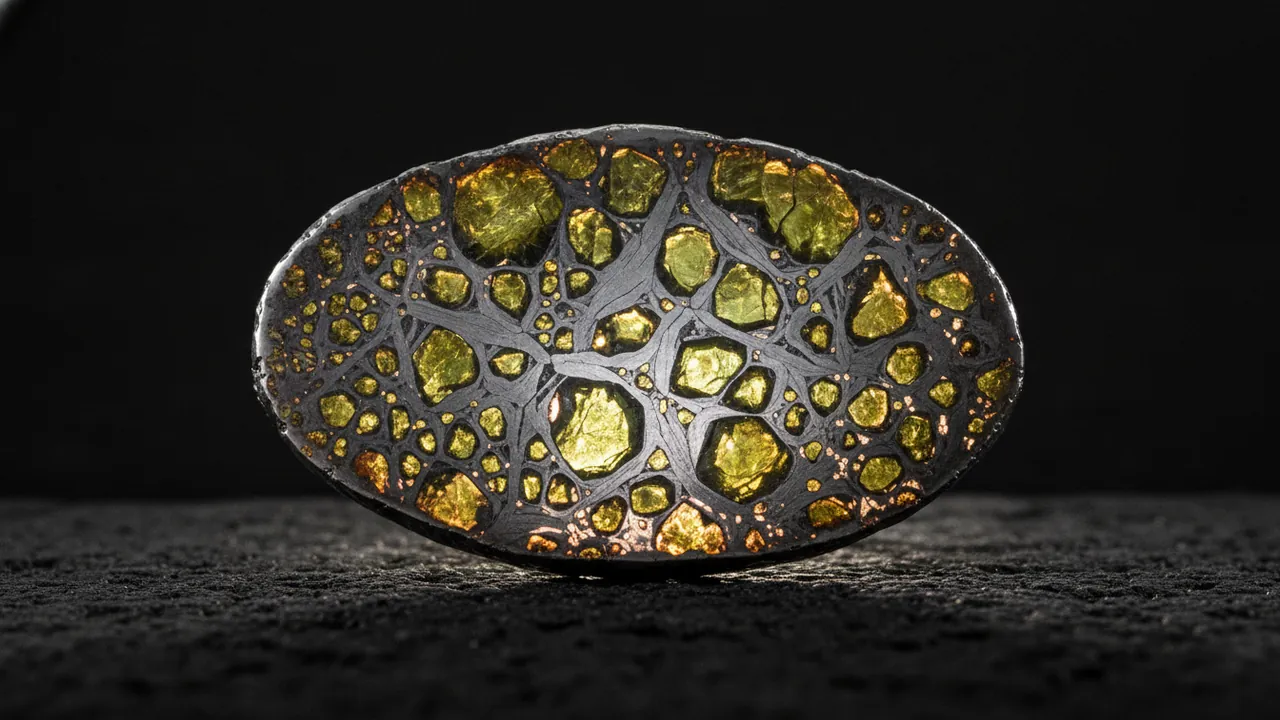
A pallasite is a stony-iron meteorite made of olivine crystals, sometimes gem-quality peridot, set in a matrix of iron-nickel metal. It is the answer to the question of which meteorite has crystals in it, and thin polished slices glow yellow-green when held to the light.
What a pallasite meteorite is made of
Olivine is a common silicate mineral that gem cutters call peridot when it is clear and green. In a pallasite, rounded or angular olivine grains are embedded in a continuous web of metal. Cut a slice thin enough and light passes through the crystals. The name comes from Peter Simon Pallas, a naturalist who described an olivine-bearing iron mass found in Siberia in the 1770s.
The Meteoritical Society recognizes three main groups (main-group pallasites, Eagle Station pallasites and pyroxene pallasites) plus ungrouped examples. The Society's database records classifications and finds, and it approved 24 new pallasites in 2025 alone.
Where pallasite meteorites came from
The leading explanation is that pallasites formed near the core-mantle boundary of an asteroid big enough to have separated into layers, where olivine from the mantle mixed with molten iron-nickel from the core. That is an interpretation, not something anyone has watched, and the exact process is still under discussion. It is a nice thought, though, that a slice on your desk may be a piece of a vanished world's inner boundary.
Famous pallasite finds
- Brenham, Kansas, USA, a main-group pallasite.
- Fukang, China, a large main-group find with translucent olivine.
- Esquel, Argentina, known for especially attractive gem-quality olivine.
- Seymchan, Russia, with olivine-rich areas and metal-rich portions.
- Imilac, Chile, a historic find with attractive crystals.
Where pallasites sit among other meteorite types
| Kind | Made of | Share of observed falls |
|---|---|---|
| Ordinary chondrites | Silicate grains and chondrules, some metal | About 80 to 85 percent |
| Iron meteorites | Iron-nickel metal | A few percent of finds |
| Pallasites | Olivine crystals in iron-nickel metal | A small fraction |
Pallasites are therefore scarce next to the ordinary stones that make up most meteorites, which helps explain slice prices. The same weight and streak habits apply to the dark, ordinary kind. The wider picture of types and origins is on what is a meteorite, and sliced iron is worn in meteorite rings.
Pallasite prices, checked November 22, 2026
| Pallasite | Dealer listing | Price per gram |
|---|---|---|
| Fukang | $1,195 for 24 g | About $49.79 |
| Imilac | $1,250 for 25.66 g (another dealer $1,417) | About $48.71 to $55.23 |
| Seymchan | $301 for 30.76 g | About $9.79 |
These are advertised prices on listings dated August to November 2026, not completed sales. Transparency, color, polish and metal pattern all change the figure, and a slice with big, clear crystals costs far more than a dull one.
How to tell a real pallasite slice from a fake
- Olivine must be naturally enclosed in the metal. Crystals that look glued onto a flat base, painted or set in resin are warning signs.
- A real slice is dense and strongly magnetic because of the metal.
- Natural olivine varies in size, shape, cracks and transparency. Very uniform grains are suspicious.
- Iron-rich pallasites such as Seymchan can show a Widmanstatten pattern after etching, which is strong evidence of meteoritic iron, though a polished unetched slice may not show it.
- Ask for weight, locality, provenance, classification and whether the slice is rust-stabilized.
A magnet, a nickel test or density alone cannot confirm it. Laboratory chemistry or oxygen isotopes can, and a membership claim by a dealer should be checked rather than trusted. If you want the tests that work on ordinary dark stones, see what a meteorite looks like. For crystals you can find on the ground instead of in space, the crystal identifier is the place to begin, and the rock identifier hub links the rest.
Frequently asked questions
Is peridot found in meteorites?
Yes, in pallasites. These meteorites contain olivine crystals, and gem-quality olivine is called peridot. Fukang and Esquel are known for translucent olivine clear enough to cut.
How much are pallasites worth?
On listings checked November 22, 2026, Fukang was about $50 per gram, Imilac about $49 to $55 and Seymchan about $10. Olivine transparency and polish move the price.
What does pallasite mean?
Pallasite is the name of a class of stony-iron meteorite, honoring Peter Simon Pallas, who described a Siberian olivine-iron mass in the 1770s.
How can I tell if a pallasite slice is real?
Check that the olivine is enclosed in the metal rather than glued on, that grains vary naturally, and that the slice is dense and magnetic. Ask for locality and classification documents.
Where do pallasites come from?
Most researchers think pallasites formed near the core-mantle boundary of a differentiated asteroid, where olivine mixed with molten iron-nickel. That is an interpretation, not an observed process.
What are the main groups of pallasites?
The Meteoritical Society recognizes three main groups: main-group pallasites, Eagle Station pallasites and pyroxene pallasites, plus ungrouped examples.