
What is a meteorite? Types, origins and the words that confuse people
By the AstroStack team · Updated
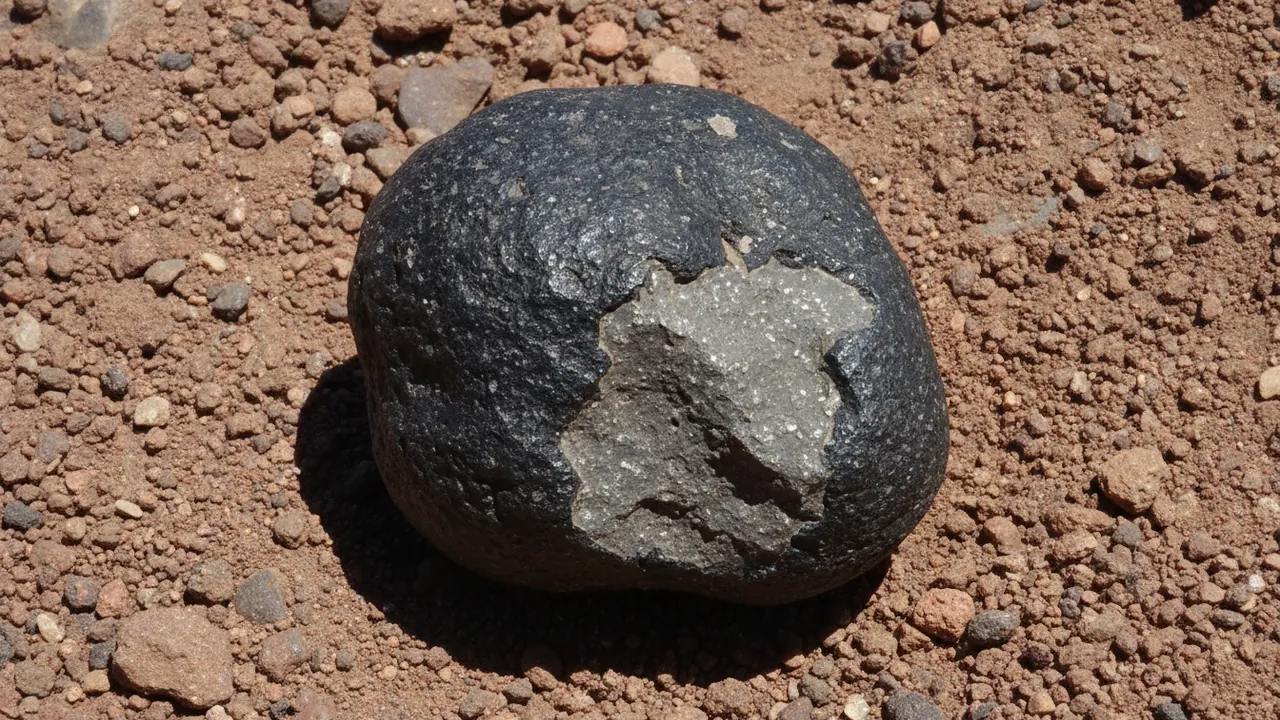
A meteorite is a piece of rock or metal from space that survives the trip through Earth's atmosphere and lands on the ground. Before it lands it is a meteoroid, and while it burns in the sky it is a meteor. Most meteorites are fragments of asteroids, about 4.6 billion years old, and they come in three main kinds: stony, iron and stony-iron.
Meteoroid, meteor, meteorite and asteroid: the words
These terms get mixed up constantly, and the difference is only where the object is when you name it.
| Term | What it means |
|---|---|
| Asteroid | A rocky remnant of the early Solar System, from about 4.6 billion years ago. Most orbit between Mars and Jupiter |
| Comet | A remnant made mostly of ice covered with dark organic material |
| Meteoroid | A natural object moving through space, from a dust grain to roughly a meter across |
| Meteor | The streak of light made when a meteoroid enters the atmosphere. Also called a shooting star |
| Fireball or bolide | A meteor brighter than Venus. A bolide may explode in the atmosphere |
| Meteorite | The part of a meteoroid that survives and reaches the ground |
So an asteroid is the parent body, a meteoroid is a small piece of it in space, a meteor is the light show, and a meteorite is what you can pick up. Comets shed dust that makes meteor showers, but comet material almost never survives to the ground.
Where meteorites come from
NASA states that about 99.8 percent of meteorites come from asteroids, and the remaining 0.2 percent split roughly evenly between the Moon and Mars. Lunar and Martian rocks reach us when a big impact blasts them off the surface and into space. Small asteroids are broken fragments of larger bodies that once melted, which is why iron meteorites are bits of old metal cores and some stony ones are bits of mantle.
The flow of material is large but spread thin. NASA estimates that about 44,000 kilograms of meteoritic material falls on Earth each day, almost all of it dust and sand-sized grains that never become a find. About once a year an asteroid the size of a car enters the atmosphere, makes a fireball and breaks up before reaching the ground. Over 50,000 meteorites have been recovered, many from deserts and from Antarctica, where dark rocks stand out against white or pale ground.
The types of meteorites
Meteorites are sorted by what they are made of, and that sorting is what a lab does when you submit a stone.
| Type | Made of | Includes | What it looks like |
|---|---|---|---|
| Stony meteorite: chondrite | Silicate minerals with small round grains (chondrules) | Ordinary, carbonaceous and enstatite chondrites | Dark crust, gray or brown interior with metal flecks, often dotted with round grains |
| Stony meteorite: achondrite | Silicate rock without chondrules, from melted parent bodies | Lunar and Martian meteorites, HED group | Looks like volcanic rock or basalt, often pale inside |
| Iron meteorite | Iron-nickel metal | Gibeon, Campo del Cielo, Muonionalusta | Heavy, dense, pitted; slices etch into crisscross patterns |
| Stony-iron meteorite | Mix of silicate crystals and metal | Pallasites and mesosiderites | Metal web with green olivine crystals, as in pallasites |
Stony meteorites: chondrites and achondrites
Stony meteorites are by far the most common falls. Chondrites are the primitive ones: they never melted, and the small round chondrules in them are some of the oldest solid matter in the Solar System. Achondrites are stony meteorites that did melt, which is how rocks from the Moon and Mars end up in the same group.
Iron meteorites: nickel-iron metal
An iron meteorite is mostly iron and nickel, the remains of an asteroid's metal core. They are a small share of falls but a big share of finds, because a lump of metal survives weathering and is easy to spot. Cut and etched with acid, many show a Widmanstatten pattern, the interlocking bands that form when metal cools over millions of years. That pattern is the reason iron meteorites are used in jewelry, covered in meteorite rings.
Stony-iron meteorites: pallasites and mesosiderites
The rarest group is the mixed one. Pallasites carry olivine crystals suspended in metal and may come from the boundary between core and mantle of a broken asteroid. The pallasite page covers the famous finds and how to spot fake slices.
Meteorite or earthly rock?
Meteorites do not look like what people expect. Real ones are usually small, heavy for their size and dark. A thin black fusion crust, often less than a millimeter thick, forms as the outside melts during the fall. Cut a corner and many show tiny metal flecks, and most attract a magnet. A rock that is full of holes or glassy with swirls is almost always volcanic slag, not a meteorite. The visual checklist, the tests that mean something and the look-alikes are laid out on what does a meteorite look like.
Meteorites versus impact glass
Not every space-related find is a meteorite. When a large meteorite hits, the impact can melt Earth rock into glass, and that glass is Earth material, not space material. Tektites, moldavite and Libyan desert glass all fall in this group, and the meteorite glass overview shows how to tell them apart from the real thing.
What is a meteorite worth?
Value depends on type, rarity, size and how well it is documented. Prices from one dealer, Aerolite Meteorites, show the range:
| Meteorite | Example listing | Price per gram |
|---|---|---|
| Campo del Cielo iron | 1.858 kg for $929 (September 2026) | About $0.50 |
| Ordinary chondrite (NWA 869) | 33 g for $66 (2025) | About $2 |
| Lunar meteorite (Bechar 003) | 1.0 g for $55 (September 2026) | About $55 |
| Martian meteorite (NWA 12269) | 3.0 g for $600 (September 2026) | About $200 |
At the iron rate, a one-pound (454 g) Campo del Cielo piece would be about $227, which answers the common "how much is a pound of meteorite worth" question for the cheapest common type. A Moon or Mars piece costs a hundred times as much per gram. These are asking prices, and rare falls, named finds and big pieces can sell for far more. Slices of famous irons and pallasites carry their own premiums, as in the pallasite price table.
Can you keep a meteorite you find?
It depends on where you found it. On private land, the landowner generally has the rights, and you need permission. On federal public land the rules vary by agency, and collecting may be allowed, restricted or banned. In national parks, you generally cannot remove one. Mark the spot with a photo and GPS before you touch it. The rock identifier home page links to the other guides if your find turns out to be a plain rock.
Frequently asked questions
Is it illegal to keep a meteorite?
It depends on where you found it. On private land the landowner generally owns the meteorite, and in national parks you generally cannot remove one. A meteorite bought from a dealer is yours.
How often do meteorites hit the Earth?
NASA estimates about 44,000 kilograms of meteoritic material lands daily, nearly all as dust. A car-sized asteroid enters the atmosphere about once a year and breaks up as a fireball.
Why shouldn't you touch a meteorite?
You can touch a meteorite, but skin moisture and salts speed up rust in irons and can contaminate a stone before a lab studies it. Use a clean glove or foil for a new fall.
What is the difference between a meteor and a meteorite?
A meteor is the streak of light made when a space rock burns in the atmosphere. A meteorite is the piece that survives and lands.
What is the most common type of meteorite?
Stony meteorites, mostly chondrites, are by far the most common falls. Irons are rarer as falls but form a larger share of finds because metal survives weathering.
How much is a pound of meteorite worth?
At about $0.50 per gram for common Campo del Cielo iron in September 2026, a pound is roughly $227. Ordinary stony meteorites run about $2 per gram.
Where do meteorites come from?
NASA states that about 99.8 percent of meteorites come from asteroids, and the rest split roughly evenly between the Moon and Mars.